
After the Storm: A Step-by-Step Roof Damage Checklist for Florida Homeowners
We are in the heart of the 2026 hurricane season. Here is exactly what to do after a storm hits your roof — in the right order — to stay safe, protect your claim, and keep the scammers off your doorstep.
July 22, 2026
Key takeaways
- Safety comes first: stay off the roof, treat downed lines as live, and inspect from the ground with a zoomed-in phone camera.
- Photograph everything before you clean up — Florida generally gives you 1 year from the date of loss to report a property insurance claim, and dated photos anchor it.
- Your policy expects reasonable mitigation, like emergency tarping, to prevent further damage — keep every receipt, but hold off on permanent repairs until the insurer inspects.
- Florida law bars contractors from waiving deductibles, interpreting your policy, or taking an assignment of benefits on newer policies — anyone offering to is a red flag.
- Unlicensed contracting during a declared state of emergency is a felony in Florida; verify any license at myfloridalicense.com before signing.
- Insist on a permit for the repair or replacement — the county permit record proves your roof's age and code compliance for insurers and future buyers.
It is the heart of the 2026 hurricane season, and if you live in Manatee or Sarasota County, you already know how this goes. Ian in 2022, then Helene and Milton back-to-back in 2024, taught this area more about wind, rain, and roof damage than anyone wanted to learn. Forecasters are calling for a quieter season this year — we broke down the numbers in our 2026 hurricane season forecast guide — but a quiet forecast means nothing if the one storm that forms tracks over your street.
So here is the checklist we wish every homeowner in Bradenton, Sarasota, Venice, Lakewood Ranch, and Parrish had taped inside a kitchen cabinet: what to do in the hours and days after a storm, in the right order, without getting hurt, hurting your insurance claim, or getting taken by a scammer.
Step 1: Safety before anything else
A damaged roof is a problem. A trip to the emergency room is a bigger one. Before you think about photos, tarps, or phone calls:
- Stay off the roof. Wet shingles and tile are slick, and storm-damaged decking can give way with no warning. Roof walks after a storm are a job for people with harnesses, ladders rated for the work, and the experience to know where not to step.
- Treat every downed power line as live. Keep your family and pets away, report it to the utility, and do not touch anything the line is touching.
- Watch ceilings, not just the roof. A sagging or bulging ceiling means trapped water. Keep everyone out of that room and move valuables away.
- If you smell gas, leave first and call second. Do not flip switches on your way out.
Walk the property from the ground. Binoculars or a phone camera zoomed in from the yard will show you most of what you need to see: missing or lifted shingles, cracked or displaced tiles, bent flashing, damaged soffit, debris strikes.
Step 2: Document everything, with dates
Before you clean up a single shingle from the lawn, get your phone out. Your smartphone timestamps every photo, and those timestamps matter more than most homeowners realize.
- Shoot wide, then close. Wide shots establish which house and which roof slope; close-ups show the actual damage.
- Photograph the inside too. Water stains on ceilings and walls, wet insulation, damaged contents — all of it, before you move anything.
- Keep physical evidence. Shingles or tile fragments blown into the yard are proof of what came off. Set a few aside in the garage.
- Write down the storm name and the date. Your date of loss anchors the entire claim.
Why the obsession with dates? Florida law gives you a limited window to report a claim — under Section 627.70132, Florida Statutes, notice of a new or reopened property insurance claim must generally be given within 1 year of the date of loss, and a supplemental claim within 18 months. Miss those windows and a claim can be barred entirely. Clear, dated documentation also helps an adjuster tie the damage to a specific storm instead of writing it off as wear and tear.
Step 3: Mitigate — your policy expects you to prevent further damage
Nearly every Florida property insurance policy requires the homeowner to take reasonable steps to protect the property from further damage after a loss. That means emergency measures like tarping an opening, boarding a broken window, or moving furniture out from under a leak. If you skip this step and rain pours through the same hole for two more weeks, the additional damage may not be covered.
Two practical rules:
- Keep every receipt. Tarps, plywood, plastic sheeting, a professional emergency tarping service — reasonable mitigation costs are commonly reimbursable under the policy. Check your own policy language for the specifics.
- Mitigate, but do not make permanent repairs yet. The insurer is entitled to inspect the damage. Temporary protection first; permanent work after the claim is inspected and documented.
And again: tarping a roof is dangerous work at height on a slick surface. A reputable local roofer can install an emergency tarp properly, and document the damage while they are up there.
Step 4: Insurer or contractor — who do you call first?
The honest answer is both, promptly, with a clear understanding of what each one does.
Report the claim to your insurer without delay. The 1-year notice clock is running, insurers expect prompt notice, and adjuster schedules fill fast after a regional storm. You do not need a finished repair estimate in hand to open a claim.
Get a licensed local roofer to inspect and document. A thorough inspection report — photos, measurements, a scope of what is actually damaged — helps you understand whether you are looking at a repair or a replacement before the adjuster arrives, and gives you something concrete to compare against the adjuster's findings.
Know the legal lanes. Florida law draws hard lines here. A roofing contractor cannot interpret your policy, advise you on coverage, or negotiate your claim with the insurer unless separately licensed as a public adjuster. And for policies issued on or after January 1, 2023, Florida law no longer allows post-loss insurance benefits to be assigned to a contractor — the old assignment-of-benefits arrangement is off the table, which means you stay in control of your own claim. A good contractor documents damage, provides an estimate, and does the work; they do not take over your claim, and you should be wary of anyone who offers to.
This article is general information for homeowners, not legal or insurance advice — review your own policy and talk with your insurer, agent, or a licensed professional about your specific situation. For a deeper walk-through of the claim process itself, see our Florida roof insurance claim guide.
Step 5: The storm-chaser filter
After every named storm, out-of-town operators sweep through Florida neighborhoods. Some are legitimate. Many are not. Five red flags, any one of which should end the conversation:
- Deductible games. Florida law (Section 489.147, Florida Statutes) prohibits contractors from offering to waive or rebate your deductible, or offering gifts, cash, or anything of value in exchange for letting them inspect your roof or file a claim. Knowingly paying or waiving a deductible with intent to deceive an insurer is insurance fraud — a felony. "We'll take care of your deductible" is not a favor; it is a crime you would be part of.
- No verifiable Florida license. Ask for the license number and look it up yourself on the DBPR website (myfloridalicense.com). Note that unlicensed contracting during a declared state of emergency is a third-degree felony in Florida — which tells you how seriously the state takes post-storm fraud.
- Pressure to sign today. Legitimate companies give you time to read a contract. High-pressure, sign-on-the-doorstep tactics exist because the deal does not survive a second look.
- Big upfront cash deposits. Especially from a company with no local address, no local references, and out-of-state plates.
- A "free roof" promise. Nobody can honestly promise your insurance will pay for a new roof before anyone has inspected it or read your policy. Promising claim outcomes is a red flag, full stop.
The simplest protection: hire a company with a local office, a Florida license you have verified, and a track record in your county that predates the storm.
Step 6: Why permit records matter
Here is the step most checklists skip. In nearly every Florida jurisdiction, a roof replacement — and most substantial repairs — requires a building permit and inspections. That paper trail protects you three ways:
- It proves the work was inspected. A permitted re-roof gets checked against the Florida Building Code, including the wind-resistance requirements that matter most here.
- It documents your roof's age. Insurers increasingly ask for proof of roof age when writing or renewing policies. The county permit record is the cleanest evidence there is.
- It protects your resale value. Unpermitted roof work surfaces at the worst possible time — during a sale or a future claim.
Manatee and Sarasota counties both offer online permit search portals where you can look up your own address. And if a contractor ever suggests skipping the permit to save time or money after a storm, walk away — you now know everything you need to know about how they operate.
The bottom line
After a storm: stay safe, document with dates, protect the property, report the claim promptly, bring in a verified local professional, and make sure every repair ends up in the permit record. Providential Roofing and Construction is a dual-licensed Florida contractor (Certified Roofing Contractor CCC1333042 and Certified Residential Contractor CRC1333797) with more than 1,000 projects completed and a dedicated project manager on every job. We serve Manatee and Sarasota counties, with offices in Palmetto, Jacksonville, and Stuart. If a storm has touched your roof, we offer storm and insurance restoration services and free inspections — call us at (941) 226-4000 or reach out online.
Frequently asked questions
How long do I have to file a roof damage claim in Florida?
Under Section 627.70132, Florida Statutes, notice of a new or reopened property insurance claim must generally be given to your insurer within 1 year of the date of loss, and a supplemental claim within 18 months. Waiting past those windows can bar the claim entirely. Report promptly and keep dated documentation of the storm and the damage.
Should I call my insurance company or a roofer first after a storm?
Do both promptly. Report the claim to your insurer so the notice clock is satisfied and an adjuster gets scheduled, and have a licensed local roofer inspect and document the damage so you understand the real scope. Just remember a roofer cannot negotiate your claim or interpret your policy unless they are separately licensed as a public adjuster.
Is it legal for a roofer to offer to cover my insurance deductible?
No. Florida law prohibits contractors from paying, waiving, or rebating deductibles, and doing so knowingly to deceive an insurer is felony insurance fraud that can implicate the homeowner too. Treat any deductible offer as a signal to end the conversation.
Do I need a permit to fix my roof after a hurricane?
In nearly all Florida jurisdictions, a roof replacement and most substantial repairs require a permit and inspections. Emergency tarping does not, so protect the property right away. The permit record is also the cleanest proof of your roof's age and code compliance, which insurers increasingly ask for.
How can I tell if a post-storm contractor is legitimate?
Ask for their Florida license number and verify it yourself at myfloridalicense.com, then look for a local office and references that predate the storm. Avoid anyone demanding large cash deposits, pressuring you to sign the same day, or promising your insurance will buy you a new roof before anyone has inspected it.
More from Providential News
 Hurricane Prep
The 2026 Hurricane Season Forecast — and What It Means for Your Roof
Forecasters expect a quieter-than-normal Atlantic season in 2026 — but Florida already tracked its first named storm in June. Here is what the numbers say, and why a calm forecast is no reason to skip roof prep.
 Wind Mitigation
Florida Wind Mitigation Discounts, Explained: The 9 Things Your Inspection Measures
Florida law requires insurers to offer credits for wind-resistant features. Here's what the inspection looks at, what changed in 2026, and the different kinds of discounts you may qualify for.
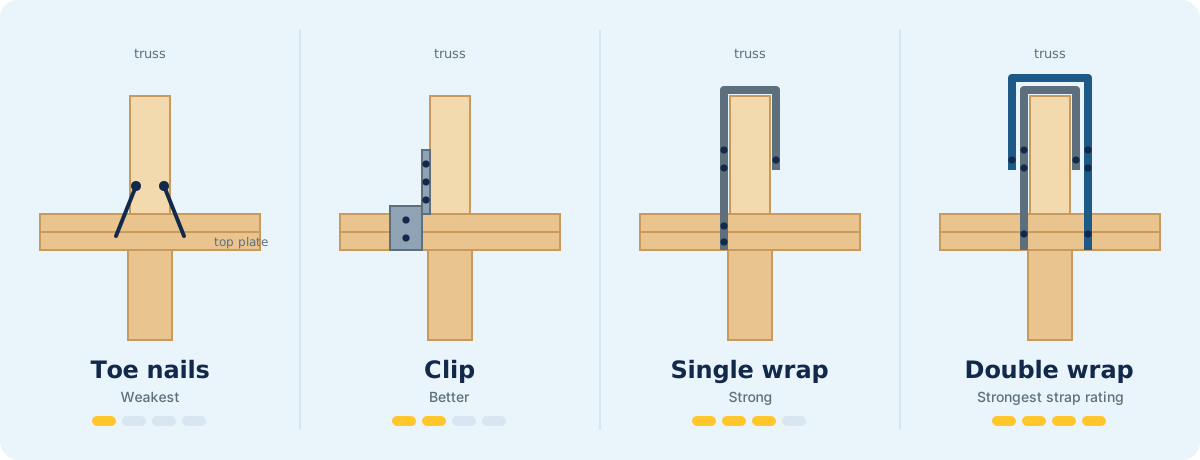 Wind Mitigation
Hurricane Straps 101: Toe Nails vs. Clips vs. Single Wraps vs. Double Wraps
The metal straps that tie your roof to your walls are one of the most important items on a wind mitigation report. Here's how each type works and why double wraps come out on top.
Ready for a free roof inspection?
No pressure, no sales games — just an honest look at your roof from a dual-licensed contractor.
Request My Free Inspection ☎ Call (941) 226-4000