
Commercial and Multifamily Roofing in Southwest Florida: A Guide for Property Managers and Boards
TPO or modified bitumen, milestone inspections versus reserve studies, and how to budget a multi-building re-roof — a straight-talking guide for the people responsible for other people's roofs.
July 15, 2026
Key takeaways
- TPO and modified bitumen dominate flat multifamily roofs (roughly 15-25 year service lives), while metal and tile serve pitched sections — with tile's underlayment, not the tile, setting the real replacement clock.
- Predictable roof spending comes from an asset register, twice-yearly professional inspections, and using the full repair-restore-replace ladder instead of waiting for leaks.
- Florida milestone inspections (condos and co-ops 3+ stories, first at 30 years, or 25 by local requirement near salt water) are structural inspections — not roof inspections — but roof neglect can surface in them.
- The Structural Integrity Reserve Study is where the roof lives: it must address the roof, and owners can no longer waive reserve funding for SIRS components.
- HB 913 (effective July 1, 2025) refined the reserve rules, including a temporary voter-approved option to redirect reserves toward milestone-inspection repairs for budgets adopted through 2028.
- Vet commercial contractors on license, carrier-direct insurance certificates, manufacturer credentials, and a written occupied-building logistics plan.
If you manage an apartment community, sit on an HOA or condo board, or own multifamily buildings in Southwest Florida, the roof is probably your largest single capital line item — and the one most likely to turn into an emergency if it is managed reactively. This guide covers the roofing systems you will actually encounter on commercial and multifamily buildings in Manatee and Sarasota counties, how to budget for them over their full life, how Florida's condo-safety laws intersect with roof planning, and what separates a commercial-grade roofing contractor from a residential crew with a bigger ladder.
The roofing systems you will see on multifamily buildings here
TPO single-ply membrane
TPO (thermoplastic polyolefin) is the most common choice for new flat and low-slope roofs on apartment buildings, clubhouses, and commercial structures. It is a single-ply membrane, usually white, installed in wide sheets with heat-welded seams. The white surface reflects a large share of Florida sun, which helps with cooling loads on conditioned buildings. Service life depends heavily on membrane thickness and maintenance — industry figures generally run in the range of 15 to 25 years or more, with thicker membranes and clean, regularly inspected roofs at the top of that range.
Modified bitumen
Modified bitumen is the modern evolution of the old built-up roof: two or more plies of asphalt-based sheet, torch-applied or self-adhered. Its strength is redundancy — multiple layers instead of one membrane — and it tolerates foot traffic well, which matters on roofs that host HVAC equipment serviced year-round. Typical service life is commonly cited around 20 years, with well-built multi-ply systems capable of more when maintained.
Metal
Standing seam metal shows up on pitched roof sections — clubhouses, mansards, townhome-style buildings — and it is the longevity champion, commonly lasting 40 to 70 years with strong wind performance. Higher upfront cost, lowest cost per year of service.
Tile on low-rise buildings
Concrete and clay tile is everywhere on Southwest Florida condos and townhomes. The critical thing boards need to understand: the tile is not the waterproofing. Concrete tile can last 40 to 50 years or more, but the underlayment beneath it — the layer that actually keeps water out — typically lasts about 20 to 25 years in Florida heat. Communities are often surprised to learn a "50-year tile roof" needs a major re-roof at year 22. We cover this in depth in our tile underlayment guide.
Lifecycle budgeting: think in decades, not emergencies
The difference between a planned re-roof and a special assessment is usually five years of paperwork. The habits that keep roof spending predictable:
- Build a roof asset register. For every building: system type, install year, permit number, warranty documents, and current condition. If you do not know the install year, the county permit record will tell you.
- Inspect on a schedule, not after a leak. Industry groups recommend professional roof inspections twice a year, plus after any major storm. On flat roofs, most premature failures start small — a clogged drain, an open seam, a punctured membrane around HVAC equipment — and are cheap to fix early.
- Use the full repair-restore-replace ladder. Flat roofs in decent condition can sometimes be restored with coating systems that extend service life for a fraction of replacement cost. Restoration is not always appropriate, but it belongs in the analysis.
- Phase large communities. Multi-building properties rarely need every roof replaced in the same year. A condition-ranked phasing plan spreads capital cost across budget cycles — our HOA and condo re-roofing guide covers how boards typically structure this.
How Florida's condo laws intersect with roof planning
Since the Surfside collapse, Florida has fundamentally changed how condominium and cooperative buildings are inspected and funded. Two programs matter for roof planning, and it is important to be precise about what each one is:
Milestone inspections are structural inspections — not roof inspections. Under Florida's building-safety law (passed in 2022 as SB 4-D and refined since), condo and co-op buildings three or more habitable stories tall must undergo a milestone structural inspection by a licensed architect or engineer by the end of the year the building turns 30, and every 10 years after. Local governments can require the first inspection at 25 years where conditions such as proximity to salt water justify it. The focus is load-bearing structure — but roof-related deterioration, like chronic leaks corroding structural elements, can absolutely surface in the findings, and a looming milestone inspection is a bad time to have deferred roof maintenance on display.
The Structural Integrity Reserve Study (SIRS) is where the roof lives. Condo and co-op associations with buildings three stories or higher must complete a SIRS every 10 years, and the roof is one of the components the study must address, along with items like load-bearing walls, waterproofing, plumbing, and electrical. Critically, owners can no longer vote to waive or reduce reserve funding for SIRS components the way many associations did for decades — roof reserves must actually be funded. The 2025 update to the law (HB 913, effective July 1, 2025) adjusted the framework, raising the threshold for "other" reservable items to $25,000 and giving boards limited, voter-approved flexibility — including a temporary option, for budgets adopted through the end of 2028, to redirect reserve contributions toward repairs recommended by a recent milestone inspection.
The practical takeaway for boards: get a real roof condition assessment done before or alongside your SIRS, so the reserve schedule reflects the actual remaining life of your roofs instead of a generic table. And a note for apartment owners: these condo statutes do not govern rental properties, but lenders and insurers increasingly expect the same documentation discipline — roof age, permit records, inspection reports — at refinance and renewal time. This article is general information, not legal or insurance advice; consult your association attorney, engineer, or insurance professional on how these requirements apply to your property.
What to look for in a commercial roofing contractor
Commercial and multifamily work is a different discipline from single-family roofing. Before you shortlist anyone:
- A state Certified Roofing Contractor license. Verify it on myfloridalicense.com. Florida's certified roofing license covers commercial as well as residential work statewide — but verify the license is active and belongs to the company actually signing your contract.
- Insurance certificates sent directly from the carrier. General liability and workers' compensation, at limits appropriate for occupied multifamily buildings.
- Manufacturer credentials for the specific system. The strongest warranties on TPO, modified bitumen, and other commercial systems are only available through contractors credentialed by that manufacturer.
- A written resident-logistics plan. Occupied-building roofing is a logistics exercise: staging areas, parking closures, debris control, noise windows, and daily communication with residents and management. Ask to see how they have handled it, not just whether they can.
- A single accountable point of contact. Multi-week, multi-building projects fail on coordination. You want one person who owns the schedule and answers the phone.
- A maintenance program after the install. The contractor who wants to inspect your roof twice a year for the next decade is planning to stand behind it.
Where Providential fits
Providential Roofing and Construction is a dual-licensed Florida contractor — Certified Roofing Contractor CCC1333042 and Certified Residential Contractor CRC1333797 — with more than 1,000 projects completed, a dedicated project manager on every job, and deep experience with insurance claims. We serve Manatee and Sarasota counties, including Bradenton, Sarasota, Venice, Lakewood Ranch, and Parrish, with offices in Palmetto, Jacksonville, and Stuart. If you manage or sit on the board of an apartment or multifamily community, we would welcome the chance to assess your roofs and help you build a realistic lifecycle plan — see our commercial roofing services or contact us for a consultation at (941) 226-4000.
Frequently asked questions
What is the best roofing system for an apartment building in Florida?
It depends on the roof geometry and the budget horizon. Flat and low-slope sections are usually TPO or modified bitumen, pitched sections are commonly shingle, metal, or tile, and many multifamily buildings combine systems. The right answer weighs upfront cost, expected service life in Florida sun and wind, and the maintenance program behind it.
Do Florida milestone inspections cover the roof?
Not directly — milestone inspections are structural inspections of condo and co-op buildings three or more habitable stories tall, performed by a licensed architect or engineer, focused on load-bearing elements. However, long-term roof leaks can cause the kind of structural deterioration those inspections look for. The roof itself is addressed in the Structural Integrity Reserve Study, which associations must complete every 10 years.
Can our condo association still waive roof reserves?
Generally no. Florida law now requires reserve funding for the structural components identified in a Structural Integrity Reserve Study, including the roof, and owners can no longer simply vote those reserves away as many associations once did. The 2025 legislation added limited, voter-approved flexibility in specific situations, so consult your association attorney about your exact options.
How often should a commercial roof be inspected?
Industry practice is a professional inspection twice a year, plus after any major storm. Most flat-roof failures start as small, cheap-to-fix problems like clogged drains, open seams, or punctures around rooftop equipment. Catching them early is the difference between a service call and an interior damage claim.
Does Providential handle commercial and multifamily roofing?
Yes — we serve apartment communities, HOA and condo associations, and multifamily properties in Manatee and Sarasota counties. We hold a state Certified Roofing Contractor license, which covers commercial work, and we assign a dedicated project manager to every job. Contact us for a roof assessment and lifecycle plan.
More from Providential News
 Commercial & HOA
Re-Roofing an HOA or Condo Community in Manatee & Sarasota: A Board's Planning Guide
A practical roadmap for community boards planning a multi-building re-roof — phasing, reserves, code compliance, architectural matching, and the documentation owners expect.
 Wind Mitigation
Florida Wind Mitigation Discounts, Explained: The 9 Things Your Inspection Measures
Florida law requires insurers to offer credits for wind-resistant features. Here's what the inspection looks at, what changed in 2026, and the different kinds of discounts you may qualify for.
 Wind Mitigation
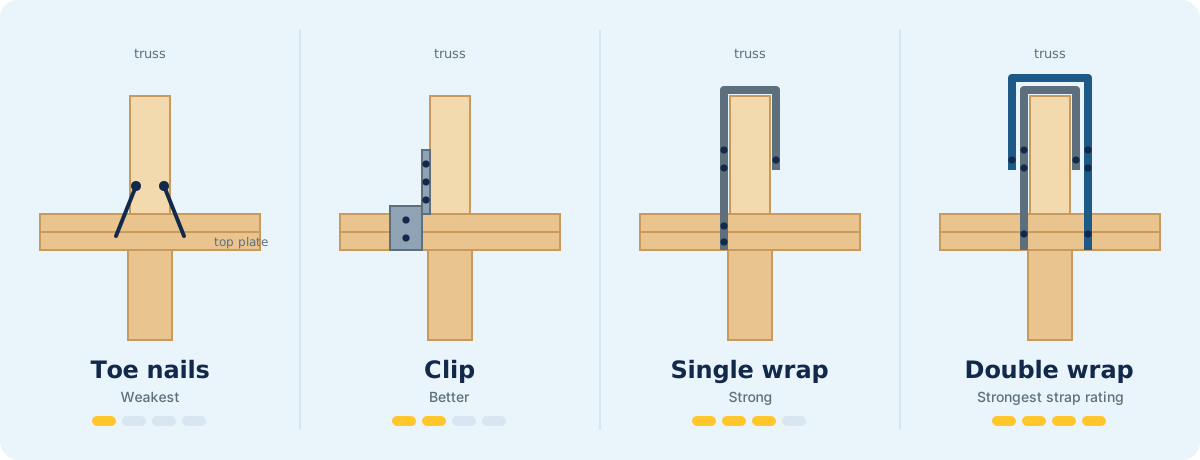
Hurricane Straps 101: Toe Nails vs. Clips vs. Single Wraps vs. Double Wraps
The metal straps that tie your roof to your walls are one of the most important items on a wind mitigation report. Here's how each type works and why double wraps come out on top.
Ready for a free roof inspection?
No pressure, no sales games — just an honest look at your roof from a dual-licensed contractor.
Request My Free Inspection ☎ Call (941) 226-4000