
When You Don't Need a Wind Mitigation Inspection or Upgrade: An Honest Guide
Wind mitigation is getting a lot of attention, and for good reason. But it isn't always the right move. Here's when a roofer should tell you to wait.
October 3, 2026
Key takeaways
- A completed wind mitigation form is generally valid for up to five years. If nothing has changed, you may not need a new one.
- If your home already rates well, or your insurer's credit for an upgrade is small, the upgrade may never pay for itself.
- If your policy doesn't cover wind, or doesn't insure the roof (like many condo unit policies), a new inspection may not change your premium.
- If a roof replacement is coming soon, it's usually smarter to wait and do the inspection after the new roof is on.
We write a lot about how wind mitigation can lower your Florida insurance premium. It can. But a roofer who tells you every homeowner needs an inspection or upgrade right now isn't giving you the whole story. Here are the common situations where you can skip it, or wait, and save your money.
You can probably wait if…
- You have a valid form from the last five years and nothing has changed
- Your home already rates at or near the top
- Your policy doesn't cover wind, or doesn't insure the roof
- A roof replacement is coming soon
- Your agent says the change won't move your premium
It's worth doing if…
- You've never had one, or your form is expiring
- You just replaced your roof, windows, or doors
- You're buying a home or shopping for a new policy
- Your insurer or agent asks for one
- Your report shows toe nails, clips, or no sealed deck, and a reroof is planned
1. You already have a valid inspection on file
A completed OIR-B1-1802 form is generally valid for up to five years, as long as there are no material changes to the structure and no inaccuracies on the form. If yours is recent and nothing has changed (no new roof, windows, or doors), a new inspection usually won't tell your insurer anything new. Forms completed on the older 2012 version before April 1, 2026 generally keep counting for their term. If you're curious whether the 2026 version would rate your home differently, ask your agent before you schedule one.
2. Your home already rates well
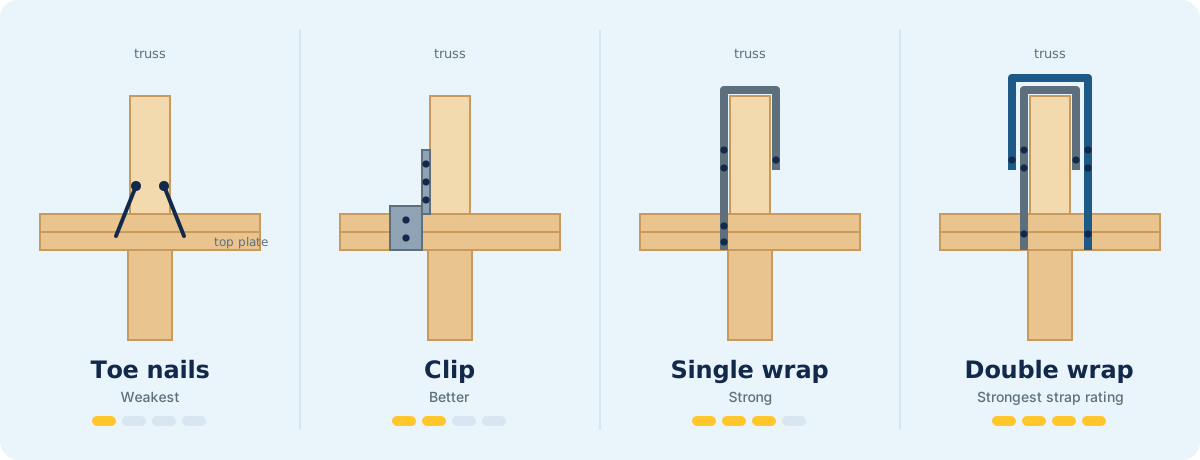
If your report already shows strong marks, like a home built under the modern Florida Building Code, a hip roof, 8d deck nailing at close spacing, wrapped roof-to-wall connections, and a sealed roof deck, there may not be much left to gain. Spending thousands to move one category might not pay back.
3. The credit won't change your premium much
Discounts vary widely by carrier. Before paying for an upgrade, ask your agent to price your policy with and without the improvement. Your insurer is required to tell you which mitigation discounts it offers, and their ranges, at issuance and renewal. If the yearly savings would take decades to cover the cost, the upgrade may only make sense if you want the added storm protection for its own sake. That's a perfectly good reason, but it's a different decision.
4. Your policy doesn't apply the way you'd think
Wind mitigation credits apply to the policy that covers windstorm damage to the structure. A few common situations where a homeowner's own inspection may not help:
- Condo unit owners. The building and roof are typically insured under the association's master policy, not your unit policy. Mitigation for the building is usually the association's project.
- Wind excluded. If your policy excludes wind and it's insured somewhere else, the credit belongs on that other policy, not this one.
- No windstorm coverage. If you don't carry wind coverage at all, there's no wind premium for the credit to reduce.
Your agent can tell you exactly which policy, if any, the form should go to.
5. A roof replacement is coming soon
This is the one we see most. If your roof is near the end of its life, an inspection today will document the old roof, and you'll need a new one once the new roof is on, because a new roof is a material change. Worse, paying for a strap retrofit now can mean disturbing the same area twice. It usually makes more sense to plan your reroof, build in the wind mitigation improvements, keep the documentation, and get the inspection after the work is finished. See Hurricane Straps 101 for why reroof timing matters.
6. The house needs repairs first
The 2026 form says that buildings with openings (windows, doors, skylights, garage doors) needing replacement don't qualify for wind mitigation rate differentials at all, regardless of their other features. An old, undocumented roof covering won't help your report either. Fixing what's broken comes first. A wind mitigation report is a snapshot, so take it when the house looks its best.
7. You're selling very soon
Structural upgrades made only to earn a discount rarely make sense if you're moving in a few months. A current, accurate form can still be a selling point, though, because it helps buyers get insurance quotes. If you already have a recent one, keep it with your listing documents.
So when should you do it?
When you've never had an inspection, when your form is expiring, after a new roof or new impact windows and doors, when you're buying or switching insurers, or when your report shows weak spots and a reroof is already on the calendar. For the full picture, start with Florida wind mitigation discounts, explained.
Not sure which side of the line you're on? We'll give you a straight answer, even if it's "wait." Request a free roof inspection or call (941) 226-4000.
Frequently asked questions
How long is a Florida wind mitigation inspection good for?
A completed OIR-B1-1802 form is generally valid for up to five years, as long as there are no material changes to the structure and no inaccuracies on the form.
Do I need a new wind mitigation inspection after a new roof?
Usually it's worth getting one. A new roof is a material change, and a new inspection can capture improved features like a current roof covering, better deck nailing, or a sealed roof deck.
Do condo owners need wind mitigation inspections?
Often not for their unit policy. The building and roof are typically insured under the association's master policy. Check with your agent and your association.
Is a wind mitigation upgrade ever not worth it?
Yes, when the premium credit is small compared with the cost, when your home already rates well, or when a roof replacement is coming soon and the upgrade is better done then. Ask your agent to price the policy with and without the upgrade first.
Sources
Florida OIR — Uniform Mitigation Verification Inspection Form (OIR-B1-1802, Rev. 04/26) · Florida DFS — Mitigation Notices, Inspections and Forms · Section 627.711, Florida Statutes
General information only, not insurance, legal, or engineering advice. Discounts, eligibility, and documentation requirements vary by insurer and policy, and rules change. Confirm specifics with your insurance agent or carrier.
More from Providential News
 Wind Mitigation
Florida Wind Mitigation Discounts, Explained: The 9 Things Your Inspection Measures
Florida law requires insurers to offer credits for wind-resistant features. Here's what the inspection looks at, what changed in 2026, and the different kinds of discounts you may qualify for.
 Wind Mitigation
Hurricane Straps 101: Toe Nails vs. Clips vs. Single Wraps vs. Double Wraps
The metal straps that tie your roof to your walls are one of the most important items on a wind mitigation report. Here's how each type works and why double wraps come out on top.
 Wind Mitigation
How Providential Helps You Get Wind-Mitigation Ready, From Roof Deck to Paperwork
Better wind mitigation ratings come from two things: work done right, and proof that it was done. Here's how we help with both.
Ready for a free roof inspection?
No pressure, no sales games — just an honest look at your roof from a dual-licensed contractor.
Request My Free Inspection ☎ Call (941) 226-4000